From Raw Logs to Rich Insights: FluentBit and Lucenia for AI Driven DevOps

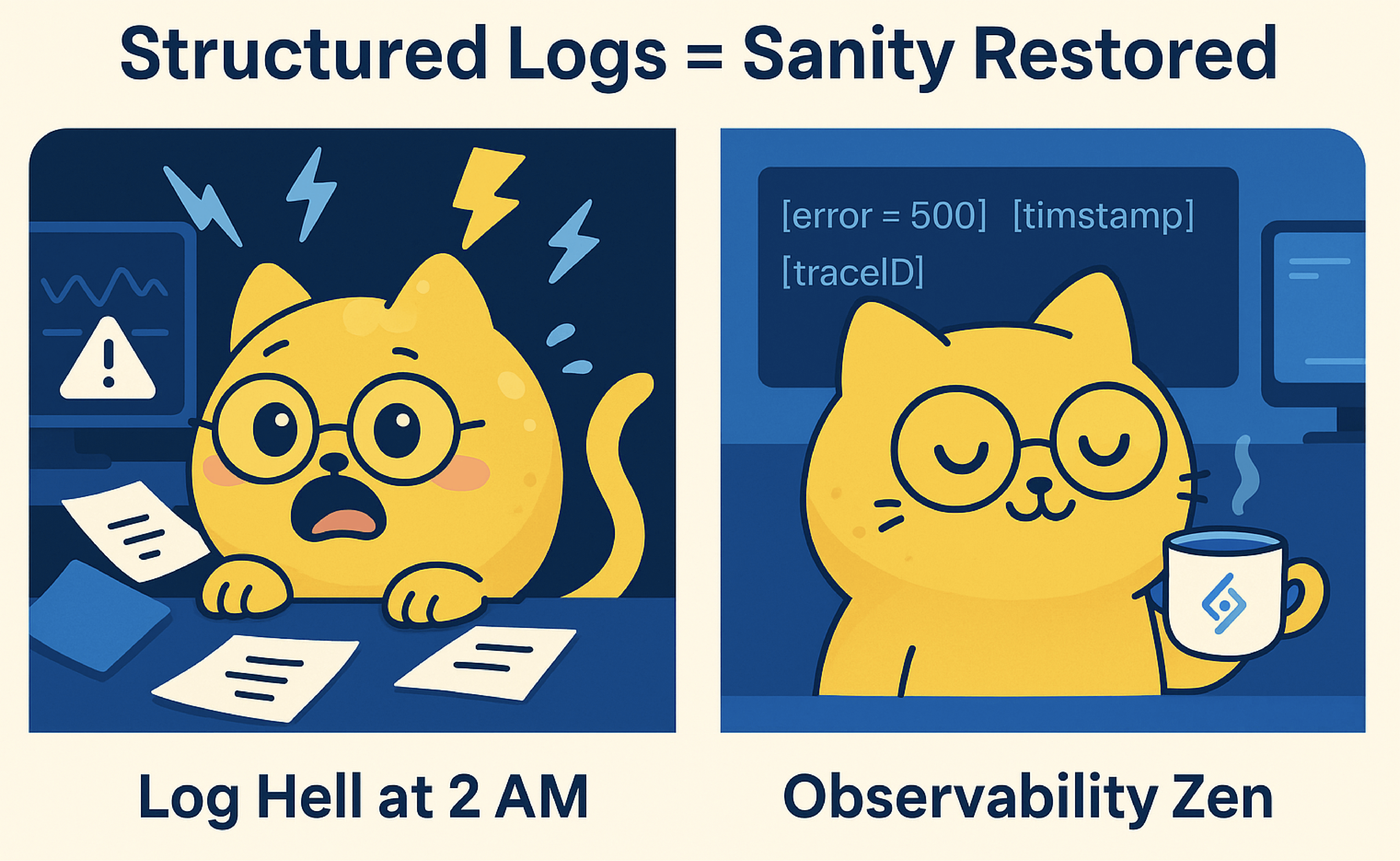
Picture this: it's your 2 am wake-up call! Your phone is buzzing with a series of non-stop alerts as your platform experiences failure after failure. You are drowning in a sea of log files scattered across legacy systems and newly implemented microservices.
Sound familiar? If you're a DevOps engineer, you know raw log files are a source of misery.
The challenge isn't just collecting logs; it's making sense of them. Today's distributed systems generate a chaotic stream of unstructured data that is difficult to understand and act upon. At Lucenia, we aim to transform this noise into actionable insights - both for organizations' engineers and AI agents. Let's talk about how to turn raw log data into a proactive, actionable, and intelligent observability system.
Massive Amounts of Data, Little Understanding
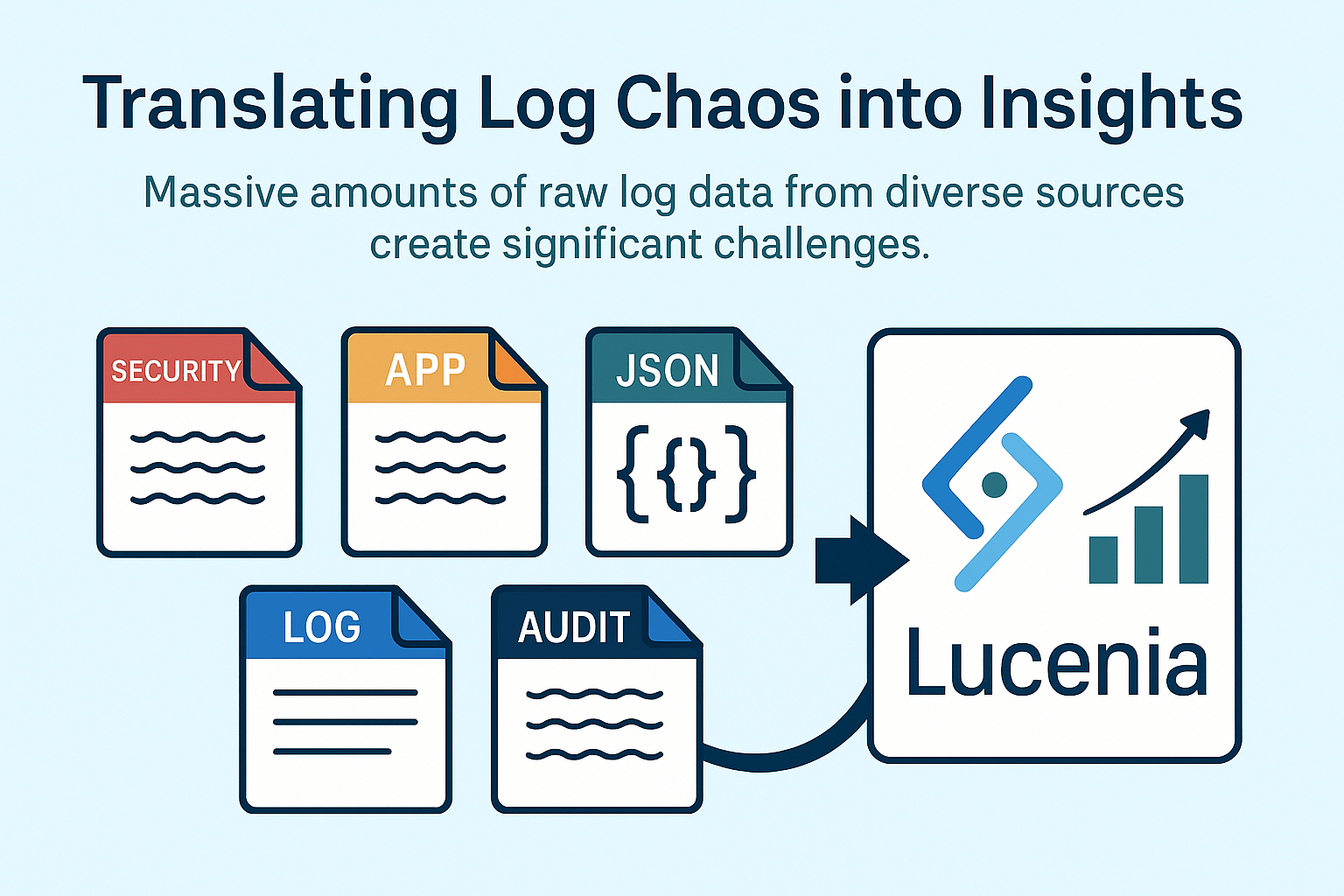
From traces through massive distributed systems, security and audit logs to application logs, organizations generate an unprecedented number of logs daily. Each service or cloud product speaks its own logging language: JSON to custom formats, legacy applications with plain text, right down to inconsistent timestamps.
Consider Lucy, a DevOps engineer at a growing startup. Her team manages over 50 microservices running in distributed Kubernetes clusters, each generating logs in a different format. When their payment processing service began exhibiting increased latency, Lucy spent hours manually correlating logs across services and using different logging tools. With unstructured data siloed across the organization, Lucy needed a unified view and contextual understanding of the broader picture.
This scenario plays out daily in DevOps teams globally, and it is not isolated to engineers. AI is increasingly used for anomaly detection, automation, and root-cause analysis, requiring structured, retrievable context. The ability to search across time, services, and formats is table stakes.
Bringing in FluentBit
FluentBit is a lightweight, high-performance log collector. It gathers and collects logs from any source while being resource-efficient enough to run alongside your applications without impacting performance.
What makes FluentBit attractive for DevOps engineers is its versatility. Whether you have container logs from Docker, microservices running in Kubernetes, infrastructure logs from cloud providers and hyperscalers - FluentBit handles them all. It is like having a universal log translator for your logging ecosystem.
FluentBit's real power lies in its ability to process data. It doesn't just forward raw log streams, it parses, filters, and enriches log data in real-time. Picture this: as logs are collected, user IDs are extracted from audit logs, response times are parsed from API logs, and container logs are enriched with Kubernetes metadata, and then shipped to storage. This processing lays the groundwork for intelligent correlation and AI-driven insights.
Enter Lucenia: From Legacy Log Analytics to AI Enabled Observability
While FluentBit excels at collection and initial processing, Lucenia is your retrieval engine: purpose-built for contextual observability. Built on the foundation of search, this retrieval layer enables engineers and AI agents to make decisions based on data trends and signals. Lucenia delivers the structured, real-time insight to understand, optimize, and act.
Lucenia's distributed architecture scales to massive volumes of operational data while maintaining lightning-fast query performance. Its advanced indexing capabilities transform raw, unstructured logs into semantically rich, structured documents – ready for flexible high-precision retrieval.
Lucenia's real strength lies in its ability to connect the dots, creating meaningful relationships between disparate log entries. What once took hours of manual correlation – logs scattered across services, environments, and formats – can now be traced and automatically connected through custom fields and temporal relationships. Lucenia creates a unified, end-to-end view of what's happening and highlights the why.
Back to Lucy's story - now with FluentBit and Lucenia
Instead of manually hunting through logs, Lucy deployed FluentBit to collect, parse, and forward structured logs from her payment service to Lucenia. Almost instantly, Lucenia empowered her to retrieve payment transactions across time windows, filter by error codes, and correlate frontend user actions with backend infrastructure latencies. The root cause was now obvious: a degraded database was bottlenecking the payment service.
This wasn't just faster debugging. It was real-time understanding – ready for both engineers and automated tooling.
Kubernetes Troubleshooting – Powered by Context
Debugging Kubernetes issues is another common challenge. While traditional log collection systems may give you structured container logs, FluentBit's Kubernetes integration enriches logs with pod metadata, namespace information, and node context. With Lucenia, Lucy can instantly retrieve all logs tied to a critical service in CrashLoopBackOff, trace the issue across all replicas, and uncover the misconfiguration behind the failure. There you have retrieval-ready context from infrastructure to root cause.
Better Together: Lucenia + FluentBit
Together, Lucenia and FluentBit represent more than just a logging solution - they form the backbone of informed observability. By transforming raw, scattered telemetry into structured, retrievable context, you are creating actionable information and a foundation for:
- Proactive Monitoring: Surface trends and anomalies before they impact production - automatically.
- Performance Optimization: Enriched infrastructure and application logs become performance insights, enabling you and your team to optimize resource usage and improve user experience.
- Compliance and Auditability: The ability to generate audit trails and security reports is improved dramatically through structured logs and the ability to correlate events across your system.
Next Steps
Take a look at FluentBit to unify and structure your logs at the edge. Then output the enriched data to Lucenia: the retrieval engine that turns your logs into context-rich information. Next, experiment with custom parsing and develop dashboards that illustrate real-time insights into your system. The investment in structured logging pays dividends in reduced incident response times, improved system understanding, and ultimately, better sleep for your DevOps team. The future of observability is machine-actionable context; Lucenia is how you get there.
Your logs tell a story. FluentBit helps collect it. Lucenia ensures it's retrievable – by engineers, agents, the systems making decisions on your behalf.